Genovese

New York gangster John Bologna was FBI informant for nearly two decades in midst of the Al Bruno murder plot

John Bologna Adolfo Big Al Bruno 300x208 New York gangster John Bologna was FBI informant for nearly two decades in midst of the Al Bruno murder plot

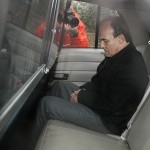
Shown here in a 2002 surveillance photo in Springfield are John Bologna, left, who police say is a “made soldier” from the New York Genovese crime family, and the late Adolfo “Big Al” Bruno.

SPRINGFIELD – Both castigating and in defense of New York gangster John Bologna, an admitted co-conspirator in the 2003 mob murder of Adolfo Bruno, federal prosecutors have offered a conflicted presentencing memo in advance of his sentencing.

The 34-page summary — filed in U.S. District Court in Manhattan, where the case ultimately landed — offers a fascinating picture of a mobster whom investigators have previously gone to great lengths to protect.

Bologna is a Westchester, N.Y.-based wiseguy and onetime “right hand” of former Genovese mob boss Arthur “Artie” Nigro, according to court records. He is among eight gangsters in Western Massachusetts and New York convicted in connection with conspiring to kill Bruno, longtime boss of the crime family here.

Two trials in New York City in 2011 and 2012 featured a handful of “made men” from Greater Springfield who provided a rare, public and detailed glimpse of the inner workings of the Mafia.

Bologna is set to be sentenced on May 7 in federal court in Manhattan on charges of murder, extortion and racketeering conspiracies to which he pleaded guilty in late 2009. These include the Bruno murder plot.

Adolfo Big Al Bruno 300x224 New York gangster John Bologna was FBI informant for nearly two decades in midst of the Al Bruno murder plot

05.22.1993 | Republican file photo | Springfield, MA, May 3, 1993, Adolfo “Big Al” Bruno (center) talks with attorneys in the hallway of the Hampden County Superior Court during a recess in his trial for attempted murder.

According to testimony, Bruno was targeted as a weak link in a power struggle here as he fell out of favor with New York mob bosses. Bruno was gunned down by a paid hitman in the parking lot of an Italian social club in Springfield’s South End on Nov. 23, 2003. Investigators struggled to piece together a solid case for years, and now say Bologna was a reluctant, but critical, witness who helped put it all together.

Bologna, 71, never made it to the witness stand because by the government’s admission – they discovered he was at once an FBI informant, a liar, a bully, an instigator and murderer.

Court records submitted in advance of his sentencing document Bologna was an informant for 17 years while ascending through the ranks of first the Gambino, then the Genovese crime families. He ultimately landed in the latter’s inner circle. Bologna helped plot murders, orchestrated shakedowns and manipulated the entire crime landscape in Greater Springfield from 2001 to 2003, prosecutors say.

In short, he was not the most believable courtroom witness and a potential embarrassment for the FBI.

“Bologna would not present as a credible individual to a jury, given his history of duplicity and repeated withholding of information. Bologna would be easily led, through cross-examination, to say things that were inaccurate; and Bologna still may not be telling the whole truth as to things about which the Government does not know,” a prosecutor wrote in the sentencing memorandum.

Federal prosecutors routinely file so-called 5K1.1 motions in support of government witnesses who offer testimony against their former cohorts. Those motions generally persuade judges to mete out far lower sentences than those called for by federal guidelines.

Cases in point in the Bruno case: Frankie Roche, the shooter whose sentencing stakes plummeted from a possible death penalty to 14 years in prison after he testified at both New York trials; Felix Tranghese, who was sentenced to four years in prison as opposed to a life sentence for his testimony; and Anthony J. Arillotta, Bruno’s successor who spear-headed Bruno’s murder and a series of unsuccessful vendettas against other rivals. Aside from Bologna, Arillotta is the only informant left to be sentenced in the case but may get a single-digit sentence for a string of murder plots.

Because Bologna lied to investigators even after he signed a formal cooperation agreement in 2007, he will face his sentencing before U.S. District Judge P. Kevin Castel with a somewhat tortured sentencing memo by the government. The memo notes that Bologna began loosely cooperating with the FBI in the 1990s and was classified as an informant, but became a “cooperating witness,” a separate classification, in 2007 when he was implicated in a sports-betting operation in New York.

According to the government’s memo, Bologna began his association with the Gambino family four decades ago.

“John Bologna was a long-time associate of the Gambino Organized Crime Family, who from the 1970s to the 1990s ran large-scale bookmaking operations and assisted in the Gambino Family’s corrupt control of the garbage industry throughout the 1990s,” the memo reads.

Bologna switched teams to align with Nigro and the Genovese family in 1999 but no further details about the defection are provided in the memo. Bologna was never “made” but became Nigro’s “right-hand-man” in overseeing rackets in New York and beyond until Nigro was jailed on extortion charges in 2006.

Nigro was “acting boss” of the powerful crime family and is now serving a life sentence after being convicted in 2011 in connection with the Bruno murder and other crimes. Also convicted in the same trial were brothers Fotios “Freddy” and Ty Geas, of West Springfield, and mob enforcers. Emilio Fusco, a made man from Longmeadow, was convicted of racketeering conspiracy in a separate trial in 2012. He was sentenced to 25 years in prison though he was acquitted of the murders of Bruno and low-level associate Gary Westerman.

In 2001, Bologna began shuttling back and forth between New York and Springfield to step up extortion efforts at Nigro’s behest. He became close with Arillotta, while the two swaggered around strip clubs and other businesses they identified as marks, the memo states. The move to edge out Bruno was born.

In previous interviews, Massachusetts state police said they approached the FBI in New York when Bologna was noted in surveillance efforts at the time. Bologna mysteriously and abruptly stopped coming to Springfield. State police said they suspected a leak, but Bologna’s status as an informant was not confirmed until years later. The U.S. attorney’s memo does not address that aspect of the case.

Arillotta, an ambitious gangster, assembled a crew that began asserting themselves through shake-downs, a takeover of an illegal slot machine business, and beat downs and murder plots against anyone who crossed their paths. Most of it took place at Nigro’s urging, with Bologna managing nearly every maneuver, according to court records.

“Although Bologna did not have a direct role in the planning of the (Bruno) murder or in giving the order itself, he knew full well that the order had been given. Indeed, on multiple occasions when Arillotta and Tranghese were slow to carry out Nigro’s order, Bologna told them to ‘do what they had been told to do’ in carrying out the murder,” the memo states.

After formally signing on with the FBI in 2007, Bologna recorded 100 conversations with his associates, according to court records. These included one with Arillotta in 2008. Arillotta was intensely under investigation for the Bruno murder after he was released from state prison on a loan-sharking conviction. Bologna was dispatched to draw incriminating statements from Arillotta about the murder. The effort fell flat. Arillotta did not take the bait, according to the court memorandum.

“In general, however, Bologna continually and dependably recorded conversations during this period,” prosecutors said, while adding that he sometimes resisted his FBI handlers’ instructions to meet with certain individuals.

When Bologna entered a nine-count guilty plea on charges brought in connection with the Bruno murder, he was allowed release with no bail, as he continued to cooperate. His deal only began to unravel in earnest when Arillotta was arrested in early 2010. Arillotta was convinced Bologna’s cooperation was enough to seal any number of life sentences against him even though the evidence, in truth, was spotty by trial standards.

Arillotta, on the other hand, was a dream witness for investigators. He shared every detail of his criminal history while Bologna was evasive and left out critical details of his own involvement in several schemes.

“In essence, Arillotta described Bologna as the instigator for a good deal of the tension that arose in Springfield prior to Bruno’s murder. As Arillotta described it, when Bologna started coming up to Springfield, it was as though dollar signs flashed before Bologna’s eyes and saw a city ripe for the taking. In addition, Arillotta explained that Bologna was always pitting mobsters against each other, and creating strife where none had previously existed,” the memo states.

Arillotta stunned investigators when he confessed involvement in the attempted murder of New York union boss Frank Dadabo in 2003. They had no idea it had been Arillotta and the Geas brothers who had shot Dadabo several times at Nigro’s behest, prosecutors wrote. Even Arillotta was confused during his early debriefings with federal investigators, because he assumed Bologna had already clued them in.

“I have no idea why I’m not already charged with this,” Arillotta said during one meeting, according to the memo.

But, Bologna had hedged and withheld information in many instances. He also neglected to tell investigators he supplied Arillotta with AK-47 weapons. He was warned multiple times by the government to “come clean,” the memo says. The government finally bailed out of its agreement with him in 2010.

“Bologna’s withholding of information was repeated, and it was significant. More to the point, given the seriousness of Bologna’s underlying conduct and the importance of his information in charging others with serious crimes, it was inexcusable,” the memo states.

The government did some hedging of its own, concluding that Bologna was both a villain and a savior for the case and expanding the investigation far beyond the early suspects.

Prosecutors calculate Bologna’s sentencing guidelines call for around 30 years in prison, although they concede they would support a sentence “somewhere below” given the “value of his cooperation.”

“For approximately ten years, beginning in 1996, Bologna led a double life, as a mobster committing crimes with the Genovese Family on the one hand and providing the FBI confidential source information about certain Gambino Family members and associates on the other,” the report says.

Prosecutors concluded that Bologna was a lost cause when he was considered a potential defense witness in the New York trials. They asked why he was unconcerned about Arillotta blowing the whistle on the Dadabo shooting and Bologna responded that he “thought more of the kid” and believed he would lie to save others in the Mafia.

“Even though Bologna had been through the cooperation process, he still somehow did not accept that he and others were truly obligated to tell the whole truth,” the memo concludes.

His lawyer, Andrew G. Patel, concedes Bologna never had the “come-to-Jesus” moment prosecutors require from a totally compliant cooperator. He also states in his own memo that his client is deaf in one ear, walks with a cane, as had been “passed from prosecutor to prosecutor” over his years of cooperation and never had the chance to develop a trusting relationship with any single investigator.

Source: masslive.com

post2ymess New York gangster John Bologna was FBI informant for nearly two decades in midst of the Al Bruno murder plot

Bonnano

Alleged mob associate from Staten Island admits to his role in billion-dollar drug-trafficking ring

010913Venizelos1SAB170059 300x300 Alleged mob associate from Staten Island admits to his role in billion dollar drug trafficking ring

Alleged Bonanno crime family associate and Grasmere resident John Venizelos pleaded guilty Monday to drug-trafficking charges stemming from his role in a billion-dollar international drug-trafficking ring, said Brooklyn federal prosecutors.

STATEN ISLAND, N.Y. — The “Big Man” could spend the rest of his life behind bars.

Alleged Bonanno crime family associate and Grasmere resident John Venizelos pleaded guilty Monday to drug-trafficking charges stemming from his role in a billion-dollar international drug-trafficking ring, said Brooklyn federal prosecutors.

Venizelos, 33, who goes by the monikers “John V,” “John from Staten Island” and “Big Man” was a “major” Staten Island-based distributor for the enterprise, prosecutors said.

Between January 2002 and February 2012, alleged ringleader Jimmy Cournoyer and his associates distributed drugs valued at more than $1 billion, said court papers. The Montreal-based empire smuggled tens of thousands of pounds of hydroponic pot into the United States through Native American reservations straddling the U.S.-Canadian border, allege authorities.

The marijuana proceeds were used to buy cocaine in Mexico. That contraband was then distributed in Canada, court documents said.

The ring has ties to the Bonanno and Rizutto organized crime families and Hell’s Angels, said authorities.

During the course of the investigation, federal agents seized more than 80 kilograms — about 176 pounds — of cocaine and about $10 million in suspected drug proceeds, said Loretta E. Lynch, U.S. attorney for the Eastern District of New York, whose office is prosecuting the case.

Venizelos managed a crew of marijuana distributors for years and sold thousands of pounds of pot, said court papers. Ledgers seized from a Cournoyer enterprise stash house in Brooklyn showed nearly $4 million in marijuana transfers to Venizelos in an eight-month period alone, court filings said.

A raid late last year of Venizelos’ home turned up $150,000 in drug proceeds, narcotics and multiple encrypted BlackBerry devices, said prosecutors.

Federal agents also seized a loaded Glock 23 semiautomatic handgun, a shotgun, multiple ammo boxes and drug-packaging material, prosecutors said.

A trace revealed the Glock was stolen from a South Carolina law enforcement special agent, said court documents.

Agents also uncovered several handwritten letters addressed to Venizelos from a jailed organized crime family associate. The writer discussed violent crimes committed with, or on behalf of, Venizelos, including a “broad daylight kidnapping” and “torture” of someone Venizelos suspected of stealing his drugs.

Authorities allege Venizelos threatened witnesses both before and after his initial bust on Nov. 27 on charges of conspiracy to import marijuana, use of firearms and money-laundering conspiracy.

In one instance, Venizelos warned a co-conspirator that Cournoyer had set aside $2 million to “deal with” “rats,” said court papers.

Venizelos also managed and co-owns Jaguars 3, a mob-owned strip club/restaurant in Brooklyn, allege court filings.

“Venizelos used violence and intimidation to protect his position as a major narcotics distributor,” Ms. Lynch said in a statement. “Those who challenged him were threatened, tortured and beaten.”

Venizelos faces a mandatory minimum sentence of 10 years in prison, and a maximum of life behind bars, said Ms. Lynch’s spokesman. He could also be on the hook for up to $10 million in fines and must forfeit $148,480 and two guns seized from his home.

“Mr. Venizelos took responsibility for his actions,” said his lawyer, John C. Meringolo of Manhattan. “He’s going to do his time and move on with his life. He hopes to get 10 years in prison.”

Source: silive.com

post2ymess Alleged mob associate from Staten Island admits to his role in billion dollar drug trafficking ring

Columbo

Former Columbo family capo to visit Mob Museum and tell how he left the mafia but lived to talk about it

Michael Franzese 300x199 Former Columbo family capo to visit Mob Museum and tell how he left the mafia but lived to talk about it

Former mobster Michael Franzese poses for a portrait before he speaks to athletes at George Mason University in Fairfax, Va., on Tuesday, Oct. 30, 2007.

Michael Franzese knows he’s lucky to be alive.

More than 30 years ago, he was one of the most powerful mobsters in America. In 1980, he rose to the ranks of caporegime, a “capo” or captain, in the Colombo crime family in New York. There he masterminded scams in the auto industry, on union kickbacks and gasoline taxes. He escaped several indictments and earned millions in cash every week.

Fortune Magazine listed him as one of the “Fifty Most Wealthy and Powerful Mafia Bosses,” and Vanity Fair claimed he was one of the mob’s biggest money-earners since Al Capone.

The mafia was in his blood, too. His father, Sonny Franzese, was the underboss of the Colombo family in the 1960s. His father wanted Michael Franzese to be a doctor, but he threw that life away after his father received a 50-year sentence.

The mob was Michael Franzese’s life, until he met Camille Garcia. Franzese fell in love, but Garcia was a devout Christian. Franzese knew if he wanted to be with her, he’d have to do something no mobster he knew had ever survived — walk away without protective custody.

Franzese pleaded guilty to a racketeering charge, paid back $20 million to the government and served eight years in prison. Since then, by living a cautious lifestyle in Los Angeles, he’s managed to stay ahead of everyone who’s gone after him.

Now he’s sharing his story and giving motivational speeches to youth groups, schools, churches and professional athletes. Franzese will be at the Mob Museum on Friday to talk about his life. Before then, he spoke with the Sun about growing up around the mob, and what it took to get out.

Growing up in a mob family, how difficult is it to avoid that life?
It’s hard to avoid. … When I was growing up, my dad always had seven or eight different agencies investigating him, and every one of them would have a car parked outside house 24 hours a day, seven days a week. Quite honestly, I grew up hating police. I hated the government and anything to do with law enforcement because of what I witnessed. They were the enemy, and my dad was the good guy. I grew up with that distorted point of view.

What experiences with law enforcement did you have growing up?

One incident that always stood out in my mind, because I was younger, is I was playing ball on the street and a kid threw the ball over my head, and it rolled down over the hill. Two of the agents were parked in a car, and the ball rolls down to the car. He gets out and stops the ball with his foot. I was 10 years old. When I got there, he pulled his jacket coat aside and he had a gun there. He said, “This is going to be for your old man one day.”

What was the process like when you decided to quit the mob life?
There’s no blueprint for walking away from that life without going into a (witness protection) program or going into hiding. My plan was to take a plea on this other case they were indicting me on, do some prison time, pay the government some money, marry my wife and move out to California. … I figured after 10 or 12 years they’d forget about me, I’ll live happily ever after out in California. It didn’t work out that way. When I was put in a position to renounce my life and I did, I didn’t realize it was going to be broadcast all over the place.
It shot back to New York like a rocket, and at that point I was in a lot of trouble. … My dad disowned me at the time, the boss put a contract on me, the feds tell me you’re a dead man anyway, you cooperate with us, we’ll put you in a program. I had a rough time for a number of years.

How did you survive?
I knew the mentality of the guys. Your best friend walks you into a room and you don’t walk out again. I moved out to California, I don’t put the house or utilities in my name, I don’t walk my dog every morning at 7 o’clock, I don’t go to the same restaurant, I don’t go to any nightclubs. I changed my whole life around.
I’m on my guard the whole time. I never sold anybody short. What happened throughout the years, just about everybody I ran with is either dead or in prison for the rest of your life. So I kind of outlasted everybody.

Now that you give motivational speeches, what message do you try to convey to the audience?
It’s all about encouragement: letting people understand that if I can come back from this situation, anybody could. I believe strongly in my faith and forgiveness, and just try to encourage people that are struggling. That’s the theme, that’s the thread.

Had you been to Vegas as a mobster? What was that like?
Hundreds of times back in the day, in the late ’70s, early ’80s. The Dunes was my place. I would be down there every other week. … It was great. We had the run of the place. I had a $2 million credit line between myself and all the guys at the Dunes. Everything was comped. … We had a big presence back in ’70s and ’80s, and that was my time. It was wide-open back then, not like today where the Gaming Board is on top of everybody. It was great for guys like me; we had the run of the place.

Do you still look over your shoulder today or is your day-to-day a little more regular now?

It’s more regular, but I still don’t take things for granted. When I’m in certain places, I make sure I have resources around me I should have. I don’t sell people short, I never do. I was part of that life and there’s guys there that are very capable of doing things. … I’m just fortunate to be out of that life.

Source: lasvegassun.com

post2ymess Former Columbo family capo to visit Mob Museum and tell how he left the mafia but lived to talk about it

Gambino

Three sentenced in mob bookmaking case

feds Three sentenced in mob bookmaking caseOne is a longtime mob associate, another is a custodian for the Stamford school system — the third is a Stamford restaurateur.
All three men were recently sentenced for their bookmaking roles in a multi-million dollar gambling operation run by members of the Gambino Crime Family in Fairfield County.
U.S. District Judge Vanessa L. Bryant sentenced Anthony “Skinny” Santoro, 49, of Staten Island, N.Y., who federal authorities say is a longtime associate of the Bonnano Crime Family to eight months in prison and ordered him to forfeit $25,000 to the government.
She sent Michael “Peewee” Vitti, 33, of Stamford, a custodial engineer for the Stamford Board of Education, to prison for 10 months and ordered him to forfeit $100,000.
Finally, Bryant sentenced Daniel “Dannyboy” DeGruttola, 33, also of Stamford, who owns the Brickhouse Bar & Grill, Bedford Street, to three months of home confinement and forfeiture of $100,000.
All three previously pleaded guilty to operating an illegal gambling business which carries a maximum five-year federal prison term.
Assistant U.S. Attorney Hal Chen charged that the trio worked for a gambling operation that took in $1.69 million from October 2010 to June 2011. The prosecutor said the operation is headed by Dean DePreta, 45, of Stamford, a reputed Gambino associate and his longtime friend, Richard Uva, 44, of Trumbull.
Their operation included street bookies, an internet gambling website in Costa Rica, and three gambling houses in Stamford and Hamden, according to court documents. Both DePreta and Uva have pleaded innocent to charges and are awaiting trial.
Chen said Santoro is a longtime associate of Vito Badamo, a made member of the Bonnano Crime Family. The two were arrested, convicted and incarcerated following a 1995 attempted New York warehouse break-in with the intention of stealing several pounds of cocaine. The break-in was interrupted by police and a shoot out occurred in which one of the pair’s accomplices was killed, court documents show.
In this case, Chen charged that DePreta and Uva refused to pay off $28,000 in winnings to Santoro’s gamblers because they believed he was manipulating wagers. Chen said they turned over money only after Santoro “enlisted the assistance of his superiors in the Bonnano Family.”
The prosecutor said Vitti’s gamblers lost about $310,000, and DeGruttola’s lost $220,000 to DePreta’s operation from the fall of 2010 to the spring of 2011.
In a Jan. 29, 2011, telephone call recorded by the FBI, DeGruttola complained to Uva of some gamblers who couldn’t pay.
Uva told him to get their names “because they might be guys you can control¦You know what I’m saying?”
He continued: “You gotta make sure they know they can’t do that.”

Source: ctpost.com

post2ymess Three sentenced in mob bookmaking case

Lucchese

Mafia kin’s ‘discrim’ nix

International Union of Operating Engineers Mafia kin’s ‘discrim’ nix

International Union of Operating Engineers

A grandnephew of late Luchese “goodfella” Paul Vario lost his legal fight after claiming he had been barred from joining a union because of his Italian-American heritage.

Thomas Vario had sued Local 14-14B of the International Union of Operating Engineers, saying he was denied membership because of an “Italian criminal connection.” The union runs skyscraper cranes.

Brooklyn federal Judge Sterling Johnson Jr. ruled that the union’s court-appointed mob-connection watchdog had acted properly.

Source: nypost.com

post2ymess Mafia kin’s ‘discrim’ nix

Camorra

Police in Naples bust 18 from Camorra extorsion ring

 Police in Naples bust 18 from Camorra extorsion ringGang took percentage from videopoker rentals and earnings

Naples, April 17 – Police in Naples arrested 18 suspected Camorra mafia members in the early hours Wednesday, allegedly part of an extorsion ring. Investigators have linked the men to the Falanga and Di Gioia clans that operate in the town Torre del Greco just north of Naples. The gang allegedly skimmed a percentage of videopoker concessions from bars renting the gambling machines, as well as from the companies that owned them.

Source: gazzettadelsud.it

post2ymess Police in Naples bust 18 from Camorra extorsion ring

Other Recent Posts

Israel to Open ‘Cyber Gym’ for Training Against Hackers

| May 12, 2013 | 0 Comments

Israel Cyber Gym 300x199 Israel to Open Cyber Gym for Training Against Hackers

An Israeli participant at a cyber security conference at Tel Aviv University.

Israel Electric gets a daily workout by fending off thousands of cyber attacks. As the provider of almost all of the country’s power, it’s a popular target for hackers.
Now the state-run utility wants to make money off of the expertise it’s gained from dealing with the online assaults by opening a “cyber gym,” a virtual training arena where corporate-security trainees can spar with simulated attackers.
Cyber Control, another Israeli company, will help the utility build models of member companies’ networks for cyber-gym members. Once the arena is up and running, security staff at companies from around the world will be able to participate in exercises to defend against denial-of-service attacks and other threats in an environment that resembles their employer’s actual system.
Power companies in South Africa were among the first to express interest in the gym, Cyber Control CEO Ofir Hason said in an interview. This project is the first of its kind in Israel, Hason said.
Israel Electric’s revenue last year was hit after turmoil in Egypt cut gas supplies. The new training center, which is being set up across the street from the Orot Rabin Power Station in Hadera, Israel, is scheduled to open in the next few months.
“We are using our expertise to create another revenue stream,” said Iris Ben-Shahal, a spokesman for Israel Electric.
Israeli government networks are among the most highly attacked in the world, according to the Soufan Group, a New York-based security adviser. Adversaries include governments, terrorist groups and other extremists, the Jan. 14 report said.
Israel Electric fends off as many as 20,000 infiltration attempts a day. The goal for the gym is to help other companies bulk up to handle similar threats.

Source: bloomberg.com

post2ymess Israel to Open Cyber Gym for Training Against Hackers

For banks in cyber heist, how to get their money back?

| May 12, 2013 | 0 Comments

 For banks in cyber heist, how to get their money back?(Reuters) – Because the sums were large and such attacks are relatively new, the two Middle East banks hit in a $45 million ATM heist face an uncertain path in trying to recover their losses, financial, insurance and legal experts say.

Oman-based Bank of Muscat lost $40 million and United Arab Emirates-based National Bank of Ras Al Khaimah PSC (RAKBANK) lost $5 million in the global heist, U.S. prosecutors said on Thursday. Hackers gained access through third-party companies that processed transactions for prepaid debit cards issued by the banks, the prosecutors said.

While details of what happened are still sketchy, experts said the banks could bring claims against the processing companies in court, or they could file claims with their own and the processing companies’ insurers.

“There’s no hard and fast rule,” said Dan Karson, the Americas chairman of Kroll Advisory Solutions. “We’re in very much a new cybersphere of finance, and allocating liability is still very much evolving.”

Any claims by banks against the processing companies would depend on the contracts between the two parties, Karson and other experts said. Those contracts include industry security standards, which are required by the major credit card payment networks, in this case MasterCard.

In most security breach cases, the processing company in question did not fully comply with the standards, said Doug Johnson, vice president for risk management policy at the American Bankers Association.

However, even if the processor failed to comply with security standards, banks may still be unable to get back their money. That is because the contracts between processors and banks, under terms set by credit card companies like MasterCard or Visa, typically limit the processor’s liability.

“They can’t make everybody whole, or they’ll be out of business,” said Michael Klaschka of Integro Insurance Brokers, which has many financial institutions as clients. “The bank may have very little recourse against the credit card processor.”

In the hit against Bank of Muscat, the processor is enStage Inc, based in Cupertino, California, a source close to the Bank of Muscat said. Bank of Muscat has not commented on the attack.

Officials at enStage did not respond to requests for comment on Saturday. EnStage CEO Govind Setlur said in a statement in the Times of India his company had implemented security enhancements since the attack.

In the RAKBANK case, the processor is India’s ElectraCard Services, according to people familiar with the situation. RAKBANK has not confirmed that ElectraCard Services is the payment processor and ElectraCard Services has not commented.

MasterCard has said it cooperated with law enforcement in the investigation and said its systems were not compromised in the attacks.

The banks can still try to sue the processors for negligence or other claims, but their success may be limited by their contracts, which include regulations that lay out specific fines and dispute resolution procedures mandated by the credit card companies.

Such lawsuits have proven difficult to win, according to Joseph Burton of the law firm Duane Morris in San Francisco, an expert in financial litigation. U.S. federal courts have generally, but not unanimously, found that banks are restricted to contractual remedies.

In one major case, card-issuing banks filed a class action against Heartland Payment Systems after the processor announced in 2009 that a hack had compromised the data for more than 100 million credit cards.

A federal judge in Houston, Texas, dismissed almost all of the claims in 2011, finding that the banks were bound by their contracts, which included regulations set by Visa and MasterCard that govern how banks can seek relief after a breach. The banks’ appeal is pending.

Bank of Muscat and RAKBANK could also seek payment from their insurers under their general policies.

Some banks also have additional security coverage for cyber crime, although experts said the market for such policies is still relatively immature. It is not known if Bank of Muscat or RAKBANK carried cyber insurance.

The insurers, in turn, could also press claims against the processors, or the processors’ own insurers.

“It’s certainly possible that the bank could be left holding the bag,” said Frederick Rivera of the law firm Perkins Coie, an expert in financial services litigation in the United States.

A complicating factor is that the banks are located in the Middle East, while one of the processors is based in India, making it unclear which courts would have jurisdiction over any litigation. But experts said the requirements that credit card companies impose on banks and processors are global in nature.

Federal prosecutors will also seek restitution for the banks from the defendants arrested in the case, though the amount of funds available likely won’t approach the total amount of stolen money.

The U.S. Justice Department indicted eight people it said had withdrawn cash in New York, and prosecutors had seized hundreds of thousands of dollars in cash and bank accounts, along with luxury watches and a Mercedes sport utility vehicle. But the New York cell was just one part of a coordinated global heist in which $45 million was withdrawn from cash machines in 27 countries on December 21 last year and February 19 this year. U.S. prosecutors have not said where the ringleaders of the gang were based.

The prosecutors said the gang targeted prepaid debit cards issued by the two banks, using hackers who broke into the payment processing company to raise account balances and withdrawal limits for the cards.

The heist did not compromise the accounts of any individual customers, unlike in cases of identity theft. In those cases, customers are typically made whole by their financial institution or credit card companies, which in turn seek to be made whole by the company that was breached.

post2ymess For banks in cyber heist, how to get their money back?

Une mafia multiculturelle à Montréal

| May 12, 2013 | 0 Comments

juan ramon fernandez associe vito 300x199 Une mafia multiculturelle à Montréal

Juan Ramon Fernandez, un associé de Vito Rizzuto (photo), aurait comparé ce dernier à Dieu selon un enregistrement de la police.
PHOTO ÉDOUARD PLANTE-FRÉCHETTE, LA PRESSE

L’intronisation d’individus non italiens dans les rangs de la mafia de Montréal semble avoir choqué des membres de la Cosa Nostra en Sicile, selon des enregistrements de police.

Le National Post a révélé ce matin que Juan Ramon Fernandez, un associé de Vito Rizzuto tué cette semaine en Italie, avait dû insister pour faire reconnaître son statut de mafiosi.

L’homme est né en Espagne.

«Vito nous a intronisés, moi et mon camarade Raynald [Desjardins]», a-t-il assuré à un membre de la mafia qui hésitait à le reconnaître comme «made-man» et à lui permettre de s’asseoir à leur table. Au Canada, c’est Vito Rizzuto qui «décide des foutues règles», a ajouté Fernandez.

«Tu n’es pas Italien», a répliqué son interlocuteur, l’air surpris.

«Fais preuve de respect. Je m’assieds à la droite de Dieu. Aussi près que ça», lui a répondu du tac au tac Fernandez, faisant apparemment référence à Vito Rizzuto, finissant de convaincre le Sicilien, toujours selon le National Post.

Traditionnellement, seuls les individus d’origine italienne peuvent espérer joindre officiellement les rangs de la Cosa Nostra.

Source: lapresse.ca

post2ymess Une mafia multiculturelle à Montréal
Namecheap.com - Cheap domain name registration, renewal and transfers - Free SSL Certificates - Web Hosting Business Directory for New York, New York Law Blogs Online Marketing Toplist Newswire Blogs - BlogCatalog Blog Directory Powered by Hostgator
eXTReMe Tracker